
source: http://youtu.be/waOuf5PLKAQ
Saturday, August 20, 2011

Monday, August 1, 2011
Sunday, July 31, 2011
Video - Butter Paneer Masala by Manjula, Indian Vegetarian Curry
source: http://youtu.be/DIkRo-2mIEw
Thayir Sadam

Thayir Sadam, a famous delicacy of Tamil Nadu is also known as yogurt rice or yoghurt rice. Though originating in Tamil Nadu, it is one of the most loved recipes of India. This Indian cuisine is mouth watering and less spicy. It is also prepared in the states of Andhra Pradesh, Kerala and Karnataka.
Thayir Sadam Recipe
Ingredients Required:
- Rice
- Milk
- Grated ginger
- Fresh curd
- Asafoetida
- Green chilies
- Coriander leaves
- Salt
- Ingredients for seasoning:
- Black gram lentils
- Mustard seeds
- Bengal gram lentils
- Rice is sieved, washed and boiled. Later it is cooled and mashed.
- In the mashed rice, milk is added and kept aside.
- A cooking pan is taken and white oil is heated in it. Then mustard seeds are crackled in it. After this, Bengal gram lentils along with black grams are added to this.
- It is tossed in oil until light golden in color. Then chopped green chilies are added.
- These are stirred for sometime and then grated ginger is added. It is sautéed for about 2 minutes.
- Then, rice with milk is poured over this. Curd along with asafetida is mixed.
- Then salt is added according to taste.
- Finally, it is garnished with coriander leaves.
Note: Curd rice can also be prepared without milk. However, adding more curd to the dish would make the consistency of the gravy quite thick. Other ingredients and method of preparation remains the same. However, you could add a little butter, cucumbers, grated carrots, green sweet grapes and raw mango to the dish. This would enhance the taste of the recipe of Thayir Sadam.
source: http://www.indianholiday.com/best-of-india/cuisine/thayir-sadam.html
Friday, October 29, 2010
Traditional Tamil Tiffins
Traditional Tamil Tiffins – by Lakshmi of Veggie Cuisine
Lakshmi of Veggie Cuisine who runs the wonderful RCI – Regional Cuisines of India food event is our guest poster today. RCI is a food blog event that celebrates the rich and diverse regional cuisines of India. Visit the regional cuisine round ups which are treasure houses of recipes from different part of the country to learn about our rich culinary heritage.
Guess what Lakshmi is writing about today – ‘Traditional Tiffins’, much loved by our family. Thank you Lakshmi for your effort and time in bringing to us delectable plates of not one but two tiffin items. Friends, please welcome Lakshmi. 
~ Sailaja
TRADITIONAL TAMIL TIFFINS
A plate of steaming hot idlis served with sambar and chutney on the side is what comes to mind the moment you think of a Tamil tiffin. While idlis are the most commonly available Tamil tiffin, the spread includes a whole lot of other varieties of tiffins and accompaniments. Step into any South Indian restaurant and you will find a whole array of popular Tamil tiffins like idly, dosa, vada, pongal, rava idli, uthappam, rava dosa, etc.
What you will not find on restaurant menus are traditional home made recipes like upma kozhakattai, sevai, aapam, kuzhi paniyaram, adai, idiyappam (also a Kerala delicacy) etc. Restaurants apart, mobile vendors (also called ‘Kayendhi Bhavan’) whip up delicious and fresh tiffins right out of their carts. As a kid, I remember eating at these Kayendhi Bhavans whenever we embarked on a long road trip. It was like a ritual in our family.
Breakfast is not the only meal where tiffins are consumed. They are also a great alternative when you need a light evening snack. Some of the recipes have even found their way to the dinner table. For instance, Pongal accompanied by Gothsu makes for a wholesome and nutritious dinner. Whatever be your choice, Tamil tiffins are sure to please your palette.
Accompaniments are an integral part of any traditional tamil tiffin menu. Sambar and chutney goes with idli, vada and dosa. Kurma is usually served with aapam and sevai while adai can be eaten with a simple tomato pickle or lime pickle. The most popular chutney made in Tamil households is the coconut chutney which has freshly grated coconut, chutney dal and fresh green chillies. Pair it up with idli and dosa and your taste buds will be thanking you. I love to try out recipes from various cuisines and accompaniments are no exception. Sometimes I make a Chettinad tomato chutney or a peanut chutney from Andhra cuisine to go with idlis, dosas or even adai. I also make chutneys with vegetables like tindora, zucchini, ridge gourd, etc. as a healthy alternative.
Tamil tiffins are very versatile even if you are on a low carb or low fat diet. Try substituting cracked wheat instead of rice while making pongal. For upma kozhakattai use gritts instead of rice. I recently came upon a recipe for adai with gritts. The vegetable chutneys I mentioned earlier are a great substitute to the traditional coconut chutney. The options are unlimited.
A write up on Traditional Tamil Tiffins is incomplete without a recipe for the traditional idli, sambar and chutney. Here it goes.

Idli with coconut chutney and varuthu araicha sambar
IDLI
Ingredients:
Ponni boiled rice – 4 cups (use either Laxmi Brand or Raja Brand)
Urad dal – 1 cup
Methi seeds – 1 tbsp (adjust according to taste)
Salt
Method:
1. Soak the rice and dal in separate bowls for about 3-4 hours.
2. Add the methi seeds either to the dal or rice while soaking.
3. Grind the dal to a smooth consistency.
4. Do not grind the rice into a very smooth paste. Make it a bit coarse. The idlis and dosas will turn out better.
5. Add salt and to the above batter and let ferment overnight or until you see the batter rise up.
6. Pour into idli moulds. Steam 10-12 minutes and serve hot with chutney and sambar.
Add water and dilute the batter to make dosas.
COCONUT CHUTNEY
Ingredients:
Fresh/frozen grated coconut – 1/4 cup
Chutney dal/Putana dal – 1/4 cup
Green chillies – a few according to taste
Asafoetida – a pinch
Salt to taste
For seasoning:
Mustard seeds – 1/2 tsp
Urad dal/channa dal – 1/4 tsp
Curry leaves – a few
Dry red chilly – 1
Method:
1. Put the ingredients in a blender and make a paste.
2. Season with mustard, urad dal, curry leaves and dry red chilli.
3. Add salt to taste.
4. For a thinner consistency add more water while grinding.
VARUTHU ARAICHA SAMBAR
Ingredients:
Thuvar dal – 1/2 cup
Onion – 1 (you can use a handful of pearl onions too)
Tomato – 1
Tamarind extract – 1/2 cup ( I use 2 tsps of Laxmi brand tamarind concentrate)
Turmeric powder – 1/4 tsp
Fresh coriander – for garnish
For the paste:
Coconut – 2 tbps
Channa dal – 1 tsp
Dhania/Coriander seeds – 2 tsp
Methi seeds – 1/2 tsp
Dry red chillies – 5 or 6 (adjust to taste)
Asafoetida – a pinch
For seasoning:
Mustard – 1/2 tsp
Curry leaves
Urad dal – 14 tsp
Method:
1. Cook thuvar dal and set aside.
2. Pour oil in a pan and slightly fry the onions until they become soft. Do not burn them.
3. Add the tamarind extract, tomatoes and turmeric powder and boil until the raw smell of the tamarind disappears. The tomatoes will get cooked in this process.
4. Fry the ingredients for the paste with very little oil. Make a paste and add to the tamarind mixture.
5. Let it come together then add the cooked and slightly mashed thuvar dal.
6. Add salt and water if required. Mix well.
7. Season with mustard seeds, urad dal and curry leaves.
8. Garnish with coriander.
Sambar can also be made with vegetables like bell peppers, bottle gourd, butternut squash, etc. For idlis onion sambar is the best.
The next recipe is for sevai and kurma. A light snack would be served whenever a groom came to see a prospective bride. And sevai was the most popular and a must-have item on the menu for this occasion. While making sevai from scratch is a laborious process, everyone in the house would pitch in to make this light and fluffy delicacy. Sevai is usually served with potato masala and coconut chutney. Kurma as an accompaniment to sevai offers an interesting twist to this traditional recipe.

Instant sevai with Vegetable kurma
INSTANT SEVAI
Ingredients:
Instant rice vermicelli – 1/2 packet (I buy it from the Asian store)
Mustard – 1 tsp
Urad dal – 1 tsp
Channa dal – 1 tsp
Green chillies – 1 or 2 (adjust to taste)
Cashews – 2 tsp
Lemon juice – 2 tsps
Turmeric powder – 1/2 tsp
A pinch of asafoetida
Salt to taste
Oil as needed
A few curry leaves
Fresh cilantro for garnish
Method:
1. Put a big pot of water to boil. Once the water boils add the instant rice vermicelli. Keep stirring and remove as soon as it is cooked. This takes hardly 3 to 4 minutes. Do not overcook as it will become sticky and lumpy. Drain and spread out on a plate to cool. Add 1 to 2 tsps of oil to prevent the vermicelli from sticking.
2. Pour oil in a pan and add the mustard. Once it splutters add urad dal, channa dal, green chillies and curry leaves.
3. Add the turmeric powder and asafoetida mix well and remove from the flame.
4. Transfer the rice vermicelli to the pan with seasonings and mix well. It is easier to handle the vermicelli with your hands. Keep loosening the vermicelli as you mix into the seasoning.
5. Add salt, lemon juice and cilantro and mix till all are incorporated.
6. Garnish with roasted cashews.
VEGETABLE KURMA
Ingredients:
Vegetables – 2 cups – use a combination of carrot, cauliflower, potato, green peas and beans
Onion – 1 (finely chopped)
Tomato – 1 (finely chopped)
Tomato paste – ½ tsp
Green chillies – 2 or 3
Ginger garlic paste – 1 tsp
Red chilli powder – 1 tsp
Kashmiri chilli powder – ½ tsp (for color)
Coriander powder – 1 tsp
Garam masala powder – 1 tsp
Turmeric powder – a pinch
Bay leaf – 1 or 2
Salt to taste
For the paste:
Coconut – ¼ cup
Cashewnuts – a few
Poppy seeds – 1 tsp
Fennel seeds/saunf – 1 tsp
Green chillies – 2 (optional)
Method
1. Cook/steam the vegetables and set aside. I use a microwave steamer. You can also use a pressure cooker.
2. Make a paste of the ingredients above.
3. Pour oil in a pan and add bay leaf and onions.
4. Saute until onions are soft and add green chillies and ginger garlic paste and mix well.
5. Next add the red chilli powder, Kashmiri chilli powder, coriander and garam masala powder and sauté till blended with the onions.
6. Add the masala paste, tomato and tomato paste and cook till the oil leaves the sides of the pan.
7. Add water to make the gravy thinner.
8. Drain the water from the steamed vegetables and add to the gravy.
9. Add salt to taste and garnish with fresh chopped cilantro.
Thank you Sailaja for giving me an opportunity to write a guest post on your blog. I really appreciate your effort in trying to bring to light the Indian traditional recipes and cooking ideas from home kitchens across the world. I hope the readers will enjoy reading this write up on Traditional Tamil Tiffins.
Article, recipes and images – Lakshmi
Earlier on Indian Food Trail
Maharastra
A Simple Summer Meal by Nupur
Traditional Maharashtrian Thalis – Veg & Non-Veg by Meera
Traditional Maharastrian Sweet & Snacks by Meera
Konkan Region – North Canara
An Essay on Konkani Cuisine by Shilpa
Kerala
Munchies from a Kerala home - Shn of Mishmash
Udupi-Mangalore
Exploring Udupi Mangalorean Street Foods by Sia
Tamil Vegetarian Cooking

Tamil Vegetarian Cooking
Overview
Vegetarians often embrace the culture and cuisine of India. It is estimated that a quarter of the population of India is vegetarian. Therefore, Indian cuisine is largely based around rice, legumes and spices, all vegetarian-friendly foods. Dishes and flavors vary throughout India. Northern Indian cuisine has been more strongly influenced by foreign foods, whereas southern Indian cuisine remains truer to its traditional roots. Tamil Nadu is one of India's 28 states. The ethnic and linguistic Tamil region is located in southern India and boasts a distinct, traditional Indian cuisine. The staple foods in Tamil are vegetarian.
Staples of Tamil Cooking
Most Tamil foods consist of rice, lentils and legumes. Traditionally, Tamil cooking has an extensive preparation and cooking process that blends the right spices together to bring out the best flavor. South Indian food is generally spicy and colorful. Rice may be prepared in a variety of ways, and often varies depending on the food the rice will be served with. Common types of rice in Tamil cooking include fried rice, coconut rice, tamarind rice and egg rice.
Top Malaysian Food www.701panduan.com/Malaysian-Food
Find guide to Malaysian best food. Don't miss these!
Main Entrees
Curries are among the most popular entrees in Tamil. The curries produced in Tamil vary greatly from "westernized" curries found in other countries, according to Tamil residents. Curries in Tamil often consist of rice, vegetables and spices. The curry flavor is created by blending spices, often including curry leaves, coriander, mustard seeds, pepper, cumin, turmeric, cloves, cinnamon and cardamom.
Sambar is another dish common to southern India. Sambar is a broth made from tamarind and toovar dal, a legume. Vegetables such as okra, pumpkins, potatoes and tomatoes are cooked in the broth. Coriander seeds, chillies and lentils are also ground up to make a Sambar powder that is cooked with the vegetables. When complete, the Sambar has the consistency of a vegetable stew.
Side Dishes
Poriyal is a Tamil dish made by frying vegetables in a masala spice mixture. It often accompanies a main entree. Naan and roti bread are two bread staples served with meals. Naan bread is a flat bread popular throughout India, although it's more commonly consumed in northern India. Naan bread is cooked in a clay oven and resembles pita bread but is much lighter. Roti is another bread popular in Tamil cooking. Roti bread is an unleavened flat bread that is much thinner than naan bread.
Eating Etiquette
Tamil food is served on a banana leaf. It is believed that the banana leaf has medicinal and nutritional properties that transfer to the food. It is also tradition for individuals to eat a meal sitting on the floor, and consume the food with their right hands. After the meal, it is proper etiquette for an individual to fold the banana leaf over and wash his or her hands.
International Influence
Indian food is popular throughout the world, and it is usually easy to find an Indian restaurant if you're in a major city. Many English words have come from Tamil culinary terms. The popular term "curry" comes from the Tamil word "kari," which means sauce. The English word "mango" is derived from the Tamil word "maangaai."
Pudalangai Poriyal - Snake Gourd Curry
Monday, June 26, 2006
Pudalangai Poriyal - Snake Gourd Curry
My liking for this vegetable grew considerably after coming here. Not sure why, perhaps we don't see these often in stores so it could be the rare stuff thing. They started showing up only for the past couple of months near our place. You can make yummy dishes with 'em like pudalangai-thayir kulambu/ yogurt curry, sambar and so on. It is still a relatively costly vegetable in our stores, but sure tastes good.
[ washed, peeled, unpeeled snake gourds ]

[ Seeds scooped out and sliced thin ]

Ingredients:
Snake gourd/ Pudalangai - 2 sliced thin
Mustard Seeds - 1 tsp
Urid Dal - 1 tsp
Red Chillies - 5
Sambar Powder - 1 tsp [optional]
Onion (medium size) - 1 chopped
Curry leaves few
Oil - 1 tblspn
Salt to taste
Shredded coconut - 1 tblspn [optional]
Directions:

Note: When I cook it with slow heat I don't add water. When you mix it with salt, gourd pieces yields enough water to cook it.
Here is Indiandoc's another nice version of snake gourd recipe, she listed out the medicinal uses too. Another good reason to love this vegetable.
[ washed, peeled, unpeeled snake gourds ]


Snake gourd/ Pudalangai - 2 sliced thin
Mustard Seeds - 1 tsp
Urid Dal - 1 tsp
Red Chillies - 5
Sambar Powder - 1 tsp [optional]
Onion (medium size) - 1 chopped
Curry leaves few
Oil - 1 tblspn
Salt to taste
Shredded coconut - 1 tblspn [optional]
Directions:


- Wash gourd and peel/scrape the outer skin with a knife. Cut lengthwise to scoop out seeds [they are not edible] and slice it thin as shown above.
- Heat oil in a pan and put mustard seeds and let it crackle. Add urid dal, curry leaves, red chilles, onion in the same order and saute it till it turns light golden brown in color.
- Add sliced gourd pieces, salt, sambar powder and mix everything; close the pan with a lid and let it cook in low-medium heat. You might want to add some shredded coconut.
- It is a good side dish for rice or any kind of bread.

Note: When I cook it with slow heat I don't add water. When you mix it with salt, gourd pieces yields enough water to cook it.
Here is Indiandoc's another nice version of snake gourd recipe, she listed out the medicinal uses too. Another good reason to love this vegetable.
Saturday, February 27, 2010
Masala Dosa
 Ingredients Masala Dosa
* 2 cup: Rice - preferably parboiled
* 1/2 cup: Split and husked Black Gram (Dhuli Urad) - soaked with rice for 5-6 hours
* 1/2 tsp: Fenugreek Seeds
* Oil to smear the pan for cooking the dosas
* 2 tsp: Salt
For Masala
* 500 gm (3 cups): Potatoes - boiled, peeled and cubed
* 1 1/2 cups: Onions - sliced not very thin
* 1/4 tsp: Powdered Turmeric
* 2-3: Green chillies - chopped coarsely (optional)
* 6-7 : Curry leaves or 1/2 tsp dried curry leaves
* 2 tbsp: Oil
* 1 tsp: Mustard seeds
* 2 tsp: Salt
* 1/2 cup: Water
Method
1. Grind daal mixture together to a very smooth consistency. Add salt and enough water to make into a dropping consistency. Leave to ferment for about 5-6 hours, till a little spongy.
2. If thickened too much, add a little water to thin a bit. Heat tawa, and brush oil over it. When really hot, splash a little water over it, and immediately pour batter onto it, spreading it thin, with a circular motion. This will have to be very swift and will need a bit of practice.
3. After spreading the batter, lower the heat and dribble a little oil around the edges so that it seeps under the dosa. When edges start browning a bit, pass a flat spoon under it to ease the dosa off the pan.
4. Put desired filling in the centre and fold the two edges over. Serve accompanied with sambhar and chutney
For the Masala Filling
1. Heat the oil in a heavy based pan and add the mustard seeds, then onions, curry leaves and green chillies, and sauté over high heat till the onions are a little transparent.
2. Add the salt and the turmeric and mix well before adding the potatoes. Turn the potatoes around till well mixed and add the water and let it simmer for 2-3 minutes.
http://www.surfindia.com/recipes/masala-dosa.html
Sunday, August 2, 2009
Naan Bread Recipe by Manjula

Learn how to make Indian Naan at home INGREDIENTS: Recipe makes 6 Naans 2 cups all purpose flour 1 teaspoon active dry yeast 1 teaspoon salt 1 teaspoon sugar Pinch of baking soda 2 tablespoons oil 21/2 tablespoons yogurt 3/4cup look warm water 1 teaspoon clear butter or ghee 1/4 cup all purpose flour for rolling
Ranked 3.87 / 5 | 4118 views | 2 comments
Click here to watch the video (09:07)
Submitted By: Manjulas Kitchen
Tags: Manjula�Naan�Bread�Indian�Punjabi�Vegetarian�Cooking�Recipes�Food�Learning�Cook�Pizza�Bake�Baking Flour�
Categories: Entertainment How To

Recipe: http://showmethecurry.com/2008/11/10/<b>masala</b>-mushrooms-indian-vegetarian-delight/
407 views | 0 comments
Click here to watch the video (09:06)
Submitted By: ShowMeTheCurry
Tags: Anuja�Hetal�Showmethecurry�Mushrooms�Spicy�Masala�Quick�Easy�Fast�Indian�Recipes�Videos�
Categories: How To

Learn how to make Coconut Barfi
Ranked 3.05 / 5 | 263 views | 0 comments
Click here to watch the video (04:15)
Submitted By: mjain.net
Tags: Manoj�Tarla�Laxmi�Jain�Coconuts�Barfi�Cooking�Learning�Recipes�Food�Sweet�Indian�Vegetarian�
Categories: Entertainment How To

Learn how to make Lemonade with Mint
Ranked 3.69 / 5 | 324 views | 1 comments
Click here to watch the video (02:28)
Submitted By: mjain.net
Tags: Manoj�Tarla�Laxmi�Jain�Mint�Lemonade�Cooking�Learning�Recipes�Food�Lemons�Indian�Vegetarian�
Categories: Entertainment How To
Healthy indian vegetarian recipe - indian fried macaroni Ingredients (use vegan versions): sliced green chilies freshly ground red chili paste or hot chili sauce tomato sauce quartered tomatoes boiled and diced potatoes crumbs of firm tofu sliced onion bean sprouts finely sliced cabbage yellow noodle (oil noodle) salt Directions: Heat oil and fry onion well. Add crumbs of tofu, tomatoes, potatoes and cabbage. Next, throw in noodles and bean sprouts, and more

http://www.manjulaskitchen.com Apple Crumb Pie Recipe by Manjula Please visit the above website for detailed recipe and step by step method. Thank You!
Ranked 3.55 / 5 | 516 views | 0 comments
Click here to watch the video (06:01)
Submitted By: Manjulas Kitchen
Tags: Apple�Crumb�Pie�Recipes�Manjula�Food�Cook�Make�India�Indian�Learning�Oatmeal�Vegetarian�
Categories: How To
When people talk about being vegetarian, many usually think that they do not have many recipes to choose from. Furthermore, being vegetarian in several countries like United States would only require them to vegetarian eat raw or uncooked vegetables.However, that is not the case for vegetarian Indian vegetarian recipes .Vegetable lovers will find delight in eating the delectable Indian food recipes without the need to have the same old, boring, and dull taste that they have with the typical more
Tuesday, March 24, 2009
Vendakkai pitla (Okra "stew")
There is a word in Tamil to define that elusive whatever-it-is that adds oomph to everyday food - kaimanam. The closest translation of that word is "aroma of the hand". Anybody who cooks probably acquires that quality to some degree, but there arent many who can evoke that feeling of warm contentment (home, family, food) in persons other than immediate family. As far as I'm concerned, anybody who can do that deserves the ultimate accolade. Fancy chefs with their fancy cooking dont hold a candle to all those unknown, unremarked yet fabulous home cooks out there.
Ok, returning from the high realms of philosophy, I'm dedicating this entry to Anthony's Curry Mela this week (Week No 21). He does a terrific job of rounding up all the entries from various blogs, making it really convenient for lazy people like me to see who's been making what during the week!
The week before last, I left a note on his blog to say that I would try to contribute a recipe to his weekly round-up of recipes. Daft thing to do, because of COURSE circumstances ensured that I not only did not manage to keep that promise, but I also didnt get to write anything substantial that week. In hindsight, I shouldnt have made an open promise like that - Fate tends to keep an ear out just so she can scupper any plans :)
Anyway, Tony, here's my entry for your Curry Mela this week, and thanks for your efforts!
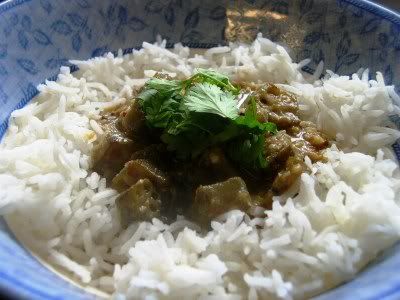
Recipe for: Vendakkai pitla (Okra "stew")
Ingredients:
2 cups sliced okra
1/2 cup cooked mashed tuvar/toor dal
1 tsp tamarind paste dissolved in 3 cups water
1/4 tsp turmeric powder
Salt to taste
For the masala paste:
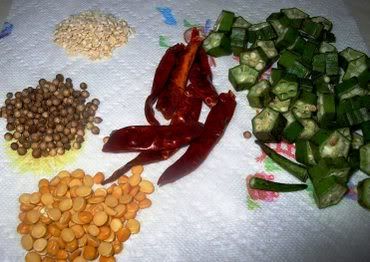
2 tsp urad dal
2 tsp chana dal
4-5 dried red chillies or to taste
2 tbsp fresh grated coconut
3 tsp coriander seeds
2 tbsp warm water
For tempering:
1 tsp oil
2 tsp mustard seeds
1/4 tsp asafoetida powder (optional)
4-5 fresh or dry curry leaves, torn
Method:
1. Grind the first four masala ingredients to a smooth paste with 2 tbsp water. Then add the coriander seeds and grind agin until the seeds are crushed but not smoothly ground. Reserve.
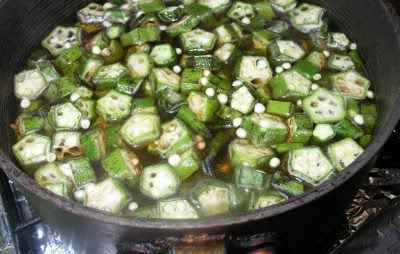
2. Cook the okra in the tamarind water till done but not mushy. (Skim off any froth that rises.)
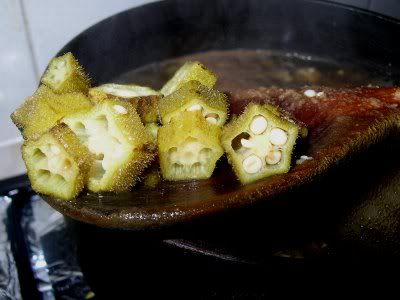
3. Blend the masala, turmeric powder and cooked tuvar/toor dal with 1/2 cup water in a bowl, making sure there are no lumps.
4. Add this to the cooked okra along with salt to taste and stir carefully to mix without breaking up the okra pieces. Let the pitla simmer for 5 minutes while you do the tempering.
5. For the tempering, heat the oil in a small pan. Pop the mustard seeds (cover the pan) for about 30 seconds on high haet, then lower the heat and add the asafoetida powder and curry leaves.
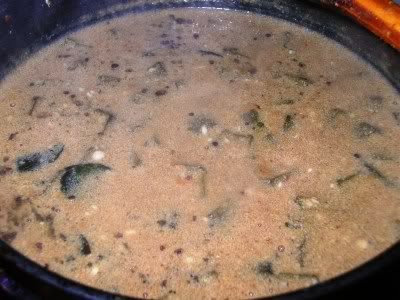
6. After 10 seconds, pour the tempering immediately on the pitla and stir it in. Serve hot over rice, accompanied by a raita and papad.
Subscribe to:
Posts (Atom)